The Broke Wake-Up Call America Needed
Let's be real.
Most Americans didn't need an economist to tell them something was wrong.
They felt it at the grocery store.
They felt it when their rent went up — again.
They felt it when they applied for jobs and heard nothing back.
They felt it when they looked at their credit card balance and wondered how it got so high so fast.
The economy didn't just "slow down." It cracked.
And the cracks didn't start in 2026 or when you got laid off. - something’s been definitely brewing since 2020, but to economists, it started way before that.
Everything since then has been one large domino effect that finally caught up with us. (and still is going)
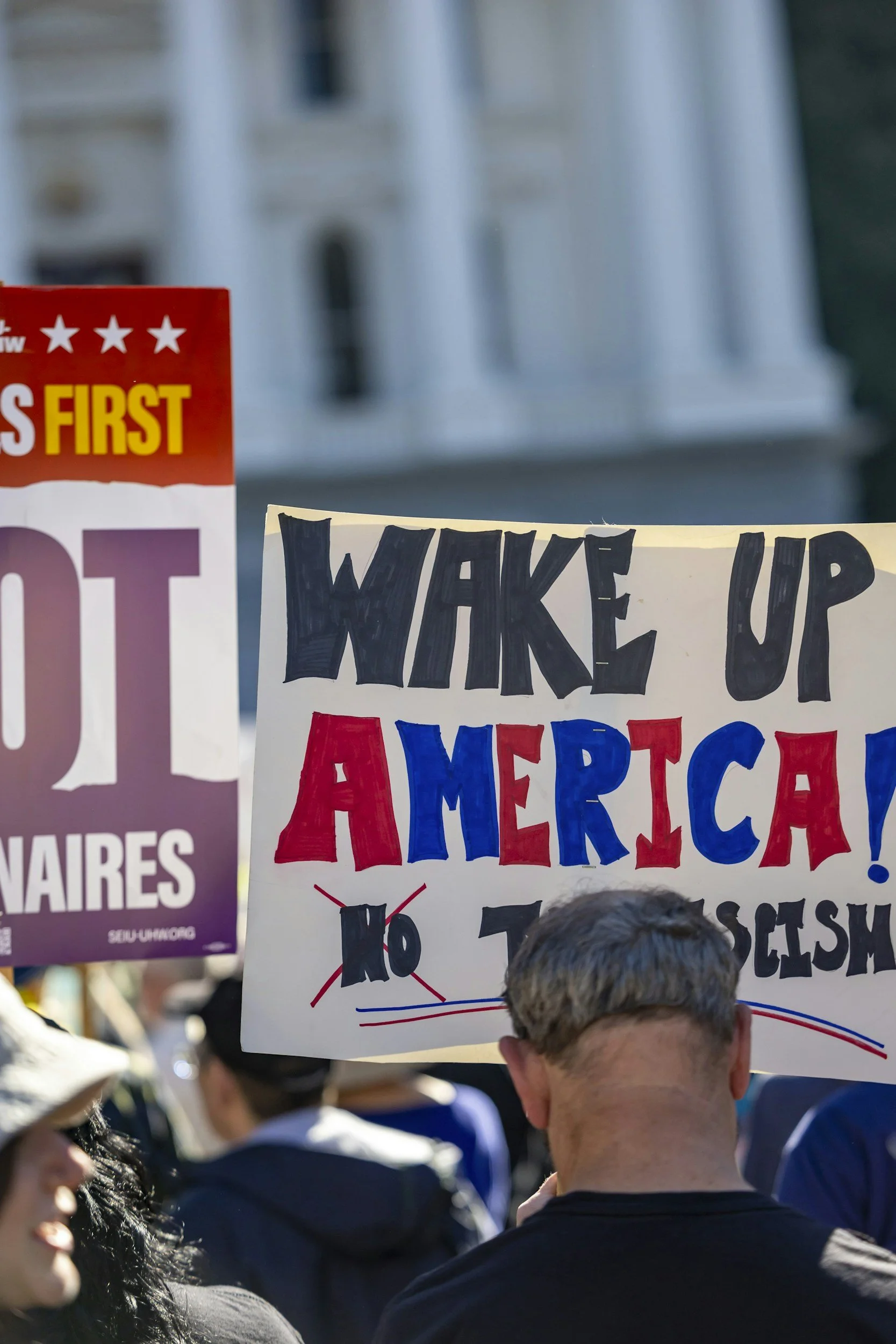
When I was going through the 2008-2009 Financial Crisis (which was the era of sub-prime mortgage lending) I was in my late 20s working as a leasing agent at an apartment complex in Austin, TX
The amount of sadness I felt to witness as our apartment complex had to evict a few people, including families, who had lost their job.
That was a real wakeup call. That your life could change at an instant.
I was still so young and certainly not educated enough just yet about real estate, investing, life, money, the world we live in, economics and what real estate truly contributed to our United States economy.
We won’t “get it” until it happens to us.
This is why, sometimes, those that are young, or have never been laid off yet, can appear in their own little bliss-ful bubble while
Ohhh…remember those days? Those days were ‘DA BEST. Not caring about your future and living in the “now.”
But now, nearly everyone at any age is tuned into social media (yep, even your grandma) and becoming more aware of the hard truths about life, society and especially our government.
Did It Start With the Pandemic?
Fast forward to when COVID hit in early 2020, the economy went off a cliff.
↘️ We lost 22 million jobs in a matter of weeks.
↘️ thousands of lives within 18 months
↘️ GDP dropped nearly 30% in a single quarter.
↘️ hundreds of thousands of households went into risk of mortgage foreclosure and rental evictions
What did the government do this time in order to avoid and economic collapse? They responded by pumping TRILLIONS of dollars into the economy.
stimulus checks, business loans, expanded unemployment benefits, and near-zero interest rates — It kept the country from completely falling apart.
But it also lit a fuse.🔥
All that money flooded into an economy where businesses were still shut down, supply chains were broken, and goods were scarce.
The result?
INFLATION. The worst inflation in 40 years — peaking above 8% in 2022.
The Fed Fought the Inflation “Flu” — But at a Cost
To cool things down, the Federal Reserve lowered interest rates aggressively down to zero then up again starting 2022 thus predicting 7 rate hikes that year, but ended up with 12+.
It worked. (Eventually). Inflation slowed. But the medicine had side effects.
Mortgage rates shot up and the housing market froze. Like an old air conditioner working against 120° hot ass day in Texas.
(It just froze up)
💣Anyone who didn't already own a home got priced out — not just by high prices, but by monthly payments that had nearly doubled.
💣Car loans got brutal.
💣Credit card rates climbed to an average of nearly 24%-30%.
People who were already stretched started leaning on debt just to cover their basics.
By the time inflation "cooled" to around 2.7%, consumer prices had already risen 29% since 2020.
That's not a relief.
That's a slower climb on top of a mountain you were already standing on.
Then Came the Tariffs
In 2025, sweeping tariffs raised the effective U.S. import tax rate from about 2% to nearly 12% — the highest it's been since 1938.
(imagine how much imported French champagne costs now, ug.)
Trump’s “brilliant” idea was to bring manufacturing back to the United States and shrink the trade deficit. Neither happened.
The trade deficit actually ballooned to over $900 billion in 2025, one of the largest ever recorded.
What happened?
Prices went up. Businesses absorbed those costs for a while — but by 2026, they started passing them straight to consumers.
(or cutting costs by putting fake chocolate in candy to keep selling to us at the same price)
The Federal Reserve's own economists concluded that tariffs explained essentially all of the excess inflation in everyday goods since early 2025 and later into 2026, due to the cost of transportation (gasoline) due to the war in Iran.
The average American household is now paying an estimated $2,512 more per year because of tariffs — up 44% from just a year before.
That's about $210 a month, gone, before you make a single financial choice.
For families already running tight, that's not a line item. That's a crisis.
The Job Market Went Cold
Meanwhile, the good ol’ labor market quietly stalled out, have you heard?
On paper, unemployment at around 4.4% doesn't sound catastrophic. But underneath that number, the picture is rough because (plot twist) the numbers were a LIE.
Job creation in 2025 was the weakest of any non-recession year in over two decades.
Hiring slowed to a crawl — the economy was adding barely 14,000 jobs a month in early 2026, compared to over 120,000 a month the year before.
Companies weren't laying people off in huge waves, but they weren't hiring either. It was a frozen job market.
The people who felt this the worst were young workers. Unemployment for Americans aged 16 to 24 stayed above 10% for six straight months in 2025.
If you were trying to get your first job, first job out of college, restart your career, or re-enter the workforce after a gap — the door was essentially C-L-O-S-E-D.
Debt Piled Up on Every Level
Americans responded to all of this the way Americans usually do when money gets tight:
they borrowed.
They spent their emergency fund
They pulled money out that was invested.(including myself. )
They basically crash out, financially.
I even met a guy who said he just cashed out $100K of his 401K just to survive!
Total U.S. credit card debt broke $1.3 trillion — an all-time record.
About half of all credit card holders are now carrying a balance month to month, paying interest rates that hover around 24%.
I have 3 credit cards that I have had for over a decade that I didn’t realized until last year that crept up to 29%!
(good Lord, pour me another glass, please.)
The one major credit card and line of credit that I have with my bank (a credit union) has stayed at 15.9% for 14+ years, which is why I preach to everyone to move their money, credit cards or loans to a local credit union.
And it's not just households.
The federal government is running a structural deficit of around $1.7 to $1.8 trillion per year — and the national debt is on track to exceed the entire size of the U.S. economy for the first time since World War II.
Baby boomers are hitting peak Social Security and Medicare usage. The math on those programs is getting harder to ignore.
The Two Americas
One of the most painful parts of this story is how unequally the pain has been shared.
Wealthier Americans — those with investment portfolios, homes bought before 2022, and stable high-paying jobs — largely rode this out fine.
This is obvious as they have secured multiple assets within their entire portfolio:
✅ The stock market recovered.
✅ started to invest in “boring businesses”
✅ Invested in insurance-related products that have a guaranteed payout
✅ AI-related tech stocks soared.
✅ Their wealth grew.
For everyone else, it's been a hard core grind. I know because I have been doing gig work now for 3.5 years.
It’s a grind on my body, my energy, my finances constantly chasing a dollar, and my car’s wear n’ tear.
The cost of a full tank of gasoline in my 2026 Nissan Kicks (compact SUV) when I purchased it in November 2025, was just $23-$26. It is now the cost of a full tank of gas as my previous 7-seater Toyota Highlander (full-size SUV) of $40 bucks!
Some economists describe this as a "K-shaped economy," where the top half recovers and climbs while the bottom half stays stuck or sinks further.
About one in three American adults believed their finances would get worse in 2026 — the highest share since 2018.
Consumer confidence dropped to levels not seen since the darkest days of the pandemic.
So Are We in a Recession?
Technically? Economists are still debating it.
A third of U.S. state economies are currently in or at high risk of recession, according to recent analysis.
Nationally, the official “call” hasn't come — but as one economist put it, "if you look under the hood, you see a lot of stress and a lot of dysfunction."
I personally have been talking about being in a recession since I was last laid off in August 2022 because being in mortgage (finance) we get hit first when interest rates rise.
The recession didn't wait for an official announcement. It showed up when the paycheck stopped stretching.
When the savings ran out. When the job search stretched from weeks into months.
The Wake-Up Call
Here's what all of this adds up to…
America has been running on borrowed time and borrowed money for years…
…and the bill is coming due.
The pandemic exposed how fragile our systems were. The policy responses — some necessary, some reckless — kicked the cans of consequences down the road.
And now we're at the end of the road, as Boys 2 Men put it..
The good news, if there is any, is that wake-up calls are only useful if you actually wake the “F” up!
The question now isn't whether the economy has problems — that much is obvious to anyone filling up a gas tank or paying rent that Americans are having issues affording life.
The question is whether the people making decisions are finally ready to be honest about what caused those problems, who's been bearing the weight, and what it's actually going to take to fix them.
Because the broke wake-up call that America needed wasn't about the economy falling apart. It was about finally admitting that for a lot of people, it already had.
Americans Need to Be Honest With Themselves…
Just like that turning point where you realize you are so not happy in a job or relationship and it's time for a “change”…
This is when we need to realize that we are still in control of our lives and are still 100% responsible for it.
The government is not going to save you the same way they are not going to magically propel you.
💗 YOU save you.
💗 YOU make yourself financially literate.
💗 YOU make you a millionaire.
💗 YOUR DRIVE and determination is what gets you there.
There is no more income stability, we must make our own.
There is no more food safety, we must make better decisions to eat or choose healthy food, or grow our own.
There are no state benefits for us to depend on, therefore we must, at a younger age, start investing and growing our own money.
We must protect our hard working income by diversifying where we spend, save or invest our money.
Unfortunately, those that won’t be able to adapt and embrace change won’t make it very far.
Because society has trained us for decades to go to work and get a job, most Americans won’t fathom the idea of starting their own business, writing a business plan, planning their strategy and growth.
Nor will they comprehend starting a youtube channel or podcast, putting their writings or thoughts on their own blog, Substack and writing about their experience let alone become a teacher to others by talking about your experiences and making money online.
And this is where I am pleading with you to go back to thinking about your passion(s).
⚡The one you set aside decades ago when you had children.
⚡The one you set aside years ago when you climbed the corporate ladder.
⚡The ones you abandoned in childhood like drawing or painting.
Find a way to make a side hustle income, be proud to market yourself girl! Let others get to know you online.
Use social media and its advantages to grow your business or grow yourself as a business, like being a YouTuber.
Because it has truly never been easier to make money online and get started for free in so many ways!
There’s almost no excuse to say you don’t know how to do something when there are millions of videos a day uploaded to YouTube from people from all over the world.
So get out there lady…and dream your little champagne dreams.